

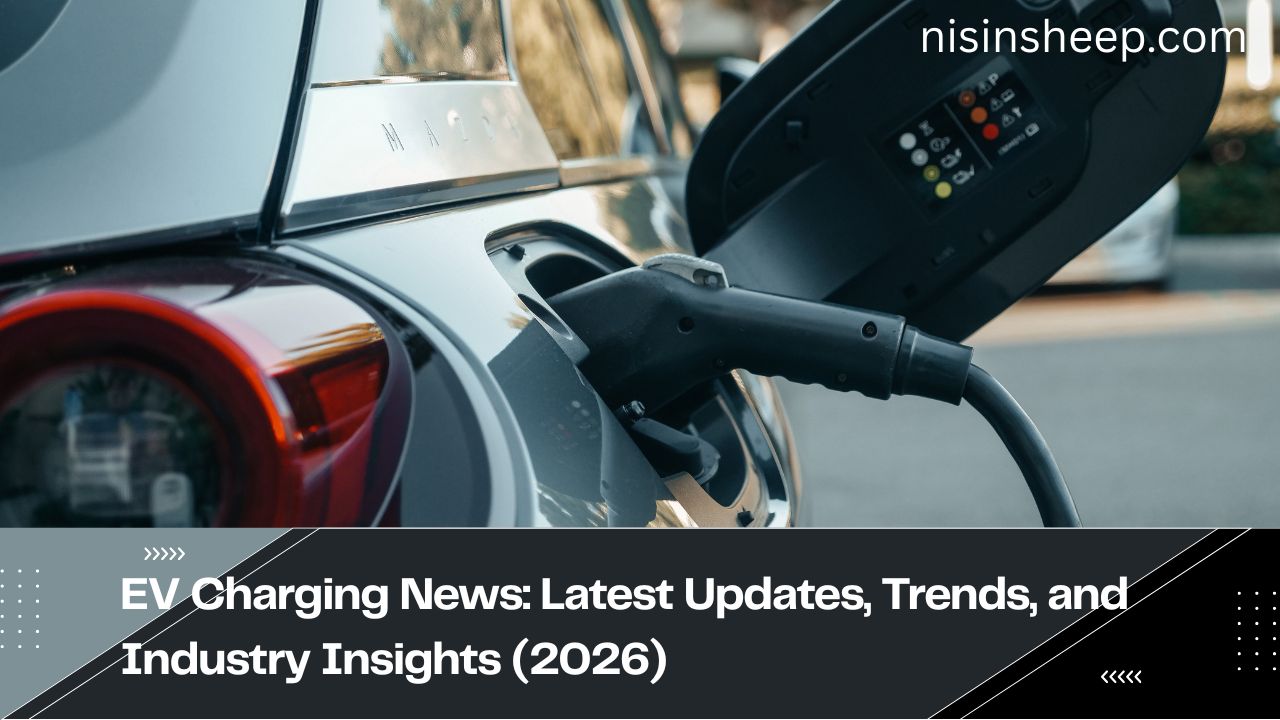
Introduction:
Over 40 million electric vehicles are expected to be on the road by the end of 2026. That number is not just impressive. It means the demand for reliable, fast, and affordable charging has never been greater. If you drive an EV, own a business, or simply want to stay informed about where energy is headed, then paying attention to EV charging news is one of the smartest things you can do.
The charging industry is moving fast. New networks are opening. Battery technology keeps improving. Governments are pouring billions into infrastructure. Whether you are a daily commuter or a fleet manager, these changes will affect you directly. This article breaks down everything that matters in 2026 so you can make smart decisions and stay ahead of the curve.
The State of EV Charging in 2026: A Quick Overview
The global EV charging market was valued at over $25 billion in 2025, and it is expected to nearly double by 2030. The United States alone added more than 50,000 new public charging ports in 2025, with 2026 projected to beat that number significantly. This kind of growth is not just a number. It represents real stations opening in real neighborhoods, highways, and parking lots near you.
Public charging infrastructure in major cities has improved dramatically. Urban areas now have charging options in grocery store lots, office parking garages, and apartment complexes. Rural areas are still catching up, but federal funding through the National Electric Vehicle Infrastructure program is closing that gap faster than most people expected.
Biggest EV Charging News Stories of 2026
Tesla Supercharger Network Opens Fully to All EVs
One of the biggest EV charging news stories of 2026 is the full rollout of Tesla’s open Supercharger network. Tesla began opening its network to non-Tesla vehicles in late 2023, and by 2026, the process is complete across North America and most of Europe. This is huge for EV drivers who do not own a Tesla. You now have access to one of the largest, fastest, and most reliable charging networks in the world.
Charging speeds at Supercharger V4 stations reach up to 350 kW, which means most vehicles can add over 200 miles of range in about 15 minutes. That kind of speed changes how people think about long-distance EV travel. The old anxiety about being stranded is fading fast.
NACS Becomes the North American Standard
The North American Charging Standard, known as NACS, is now the dominant plug type across the continent. Nearly every major automaker has adopted it, from Ford and GM to Rivian, Hyundai, and BMW. This standardization is one of the most important developments in recent EV charging news because it removes one of the biggest frustrations EV drivers faced for years.
No more carrying multiple adapters. No more showing up at a station only to find your plug does not fit. The charging experience in 2026 is significantly simpler and more consistent than it was just two years ago.
ChargePoint and EVgo Expand Aggressively
Two of the largest public charging networks in the US, ChargePoint and EVgo, both announced major expansions in early 2026. ChargePoint crossed the 40,000 active charging port milestone in the US alone. EVgo partnered with several major grocery and retail chains to install fast chargers at high-traffic locations. These moves are part of a larger push to make charging as convenient as stopping for gas.
EVgo also secured a new round of federal funding, which will be used to install DC fast chargers in underserved communities. This is a meaningful step because low-income neighborhoods and rural areas have historically had the fewest charging options. That is starting to change now.
Key Trends Shaping EV Charging in 2026
Ultra-Fast Charging Is Becoming Common
A few years ago, ultra-fast charging above 150 kW was rare and expensive. In 2026, it is quickly becoming the norm at major highway corridors and commercial locations. Several charging providers now offer 350 kW stations, and some pilot programs are testing stations capable of 500 kW or more. For drivers, this means shorter stops and less waiting.
Automakers are also updating their vehicles to accept higher charging speeds. Many new EVs released in 2025 and 2026 can accept at least 200 kW of power. When you pair a capable vehicle with a fast charger, you can add a significant amount of range in the time it takes to grab a coffee.
Bidirectional Charging Is Growing
Bidirectional charging, also called Vehicle-to-Grid or V2G technology, is one of the most talked about trends in EV charging news circles this year. With V2G, your EV does not just take energy from the grid. It can also send energy back. This turns your car into a mobile battery that can power your home during outages or sell electricity back to the grid during peak demand.
Ford’s F-150 Lightning and several other vehicles already support this feature. In 2026, more utility companies are rolling out programs that pay EV owners for contributing power during high-demand periods. For drivers, this could mean real money back in your pocket just for owning an EV.
Smart Charging and Grid Integration
The power grid cannot handle millions of EVs all charging at the same time without some smart planning. That is why smart charging is one of the top priorities for utilities and network operators in 2026. Smart charging systems automatically schedule your vehicle to charge during off-peak hours when electricity is cheaper and grid demand is lower.
Many newer home chargers come with built-in smart features that connect to your utility company’s pricing data. You set your target charge level and the time you need it by, and the system handles the rest. This approach saves you money and reduces stress on the local grid at the same time.
Wireless Charging Is Moving Out of the Lab
Wireless EV charging has been in testing for years, but 2026 is the year it starts making real progress outside of research facilities. Several pilot programs in Europe and parts of Asia are testing wireless charging pads embedded in parking spaces at airports, hotels, and shopping centers. You simply park over the pad, and charging begins automatically without any cable.
The technology still has limitations. Charging speeds for wireless systems are currently slower than cable-based options, typically capped around 11 kW. However, for overnight parking or long-duration stops, that speed is more than enough to top up a battery. Expect to see wider rollouts in 2027 and 2028 as the technology matures.
Home Charging: What Is New and What Works Best
Home charging remains the most convenient option for most EV owners. About 80% of all EV charging still happens at home, and that trend holds true in 2026. Most people plug in overnight and wake up to a full battery every morning. Simple, reliable, and cheap.
Level 1 vs Level 2 Charging at Home
| Charger Type | Power Output | Miles Added Per Hour | Best For |
|---|---|---|---|
| Level 1 (standard outlet) | 1.4 kW | 3 to 5 miles | Occasional use, plug-in hybrids |
| Level 2 (240V outlet) | 7 to 19 kW | 20 to 40 miles | Daily drivers, full EVs |
Level 2 charging is the clear winner for most households. Installing a Level 2 home charger typically costs between $500 and $1,500 including installation, but federal tax credits and utility rebates can bring that cost down substantially. In 2026, many utilities offer rebates of $200 to $500 specifically for Level 2 home charger installations.
Solar and Home Battery Integration
More homeowners in 2026 are pairing their EV chargers with solar panels and home battery systems. This combination allows you to charge your vehicle using free solar energy during the day or stored energy at night. The upfront cost is higher, but the long-term savings are real. Several states now offer additional incentives for solar and EV setups used together.
Companies like Tesla, SunPower, and Enphase are making these integrated systems easier to install and manage through single apps. You can monitor your solar production, home battery status, and EV charge level all in one place. That kind of convenience is pushing more homeowners to consider the full setup.
Workplace and Fleet Charging: A Growing Priority
Workplace charging has expanded significantly as more companies commit to sustainability goals. Installing EV chargers at the office is now seen as a major employee benefit, similar to parking or gym memberships. Many businesses receive federal and state incentives for adding workplace chargers, which reduces the cost of installation considerably.
Fleet charging is even more critical in 2026. Delivery companies, ride-share operators, and government agencies are converting large portions of their vehicle fleets to electric. Managing charging for dozens or hundreds of vehicles requires specialized software and infrastructure planning. Several companies now offer fleet charging management platforms that track energy use, schedule charging, and report on emissions reductions.
The transition to electric fleets is accelerating because the math is getting clearer. Electricity costs less than diesel or gasoline per mile, and EVs have lower maintenance costs over time. For fleet operators, the financial case for going electric is getting stronger every quarter.
Charging Costs in 2026: Are They Going Up or Down?
Charging costs vary widely depending on location, network, and time of day. On average, public fast charging in the US costs between 30 and 50 cents per kWh in 2026. Home charging is much cheaper, averaging around 13 to 18 cents per kWh depending on your state and utility plan.
The good news is that competition among networks is helping keep prices in check. As more charging operators enter the market, consumers have more choices and better pricing. Some networks offer subscription plans that reduce per-session costs for frequent users. ChargePoint’s Pass subscription, for example, offers members reduced rates across its entire network.
However, costs at certain premium locations and highway corridors can still be higher. Charging at a busy highway rest stop during peak travel times may cost closer to 60 cents per kWh. Planning your charging stops and using apps to compare prices can help you avoid the most expensive options.
Government Policy and Funding: What Is Happening in 2026
Government support for EV charging infrastructure remains strong in 2026. The Biden-era infrastructure law allocated $7.5 billion specifically for EV charging, and those funds are still flowing out to states and private companies. The current administration has maintained most of these programs, recognizing that charging infrastructure is essential regardless of political views.
Several states have gone further with their own funding. California, New York, Colorado, and Washington are among the most aggressive in offering grants, rebates, and low-interest loans for charging installation. California has set a goal of having 1.2 million public and shared chargers in place by 2030, and it is on track to meet that target.
On the federal tax side, EV buyers can still claim a credit of up to $7,500 for new vehicles and $4,000 for used EVs under the Inflation Reduction Act. Commercial charging equipment also qualifies for its own tax credit of up to 30% of installation costs. These incentives directly reduce the cost of owning and charging an EV for both individuals and businesses.
Challenges the Industry Still Faces
Not everything about EV charging in 2026 is a success story. There are still real problems that need honest attention.
Reliability remains inconsistent. Studies in 2025 showed that roughly 20% of public fast chargers in the US were out of service at any given time. While that number has improved slightly in 2026, it is still a significant issue. Nothing frustrates an EV driver more than arriving at a charger only to find it broken. Network operators are investing more in maintenance, but it remains a work in progress.
Grid capacity is a real concern. As millions more EVs hit the road, local electrical grids face new pressure. In some areas, the infrastructure to support widespread fast charging is simply not there yet. Utilities are upgrading systems, but those upgrades take time and money. This is a long-term challenge that will require cooperation between automakers, charging companies, utilities, and governments.
Charging deserts still exist. Rural communities, low-income urban neighborhoods, and tribal lands often have little to no public charging access. Federal programs are targeting these gaps, but progress has been slower than many advocates hoped. Equal access to charging infrastructure is both a social equity issue and a practical barrier to broader EV adoption.
What to Expect in EV Charging News for the Rest of 2026
The second half of 2026 is expected to bring several developments worth watching. Solid-state battery technology is approaching commercial production, and when it arrives, it will dramatically improve charging speeds and reduce battery degradation over time. Several automakers have announced solid-state powered vehicles for 2027 and 2028, which will push charging speeds into new territory.
Automakers and charging networks are also working on better in-car software that routes you to available chargers in real time, taking into account your current charge level, charging speed at each station, and pricing. This kind of smart routing already exists in basic form, but the systems are getting significantly smarter and more accurate.
Expect to see more announcements about charging at rest stops, national parks, and rural highway corridors. The federal government has been specifically focused on filling gaps along interstates, and several new corridors are expected to go live before the end of the year.
How to Stay on Top of EV Charging News
Staying informed does not have to be complicated. A few reliable sources can keep you current without overwhelming you. PlugShare and ChargePoint both offer apps that show real-time charger availability and user reviews. Electrek, InsideEVs, and CleanTechnica are solid websites for ongoing industry coverage. The Department of Energy’s Alternative Fuels Station Locator is also a practical tool for finding chargers near your location.
Social media communities on Reddit and Facebook have active EV owner groups where real drivers share firsthand experiences with specific chargers and networks. These communities are often faster than mainstream media when it comes to reporting on station outages, new openings, or pricing changes. Joining one or two of these groups is a practical way to stay connected.
Conclusion: The Charging Landscape Is Improving Fast
EV charging in 2026 is better than it has ever been. Speeds are faster. Networks are larger. Costs are more competitive. Standards are simpler. Government support remains in place. If you have been hesitant about EV ownership because of charging concerns, the situation today is genuinely different from what it was even two years ago.
That said, challenges remain. Reliability needs to improve. Rural access needs more attention. The grid needs to keep pace with demand. These are solvable problems, and significant resources are being directed at them right now.