

Table of Contents
- How Rear-End Collisions Happen
- How T-Bone Accidents Occur
- Common Injuries from Rear-End Crashes
- Injuries in T-Bone Collisions
- Which Type Causes More Serious Injuries?
- Prevention Tips
- What to Do After Either Type of Accident
- Conclusion
When it comes to car accidents, two of the most common types are rear-end collisions and T-bone accidents. Both can happen unexpectedly and often lead to substantial property damage and injuries. Understanding the differences between these crashes and the nature of the injuries they cause can help drivers better protect themselves and their loved ones.
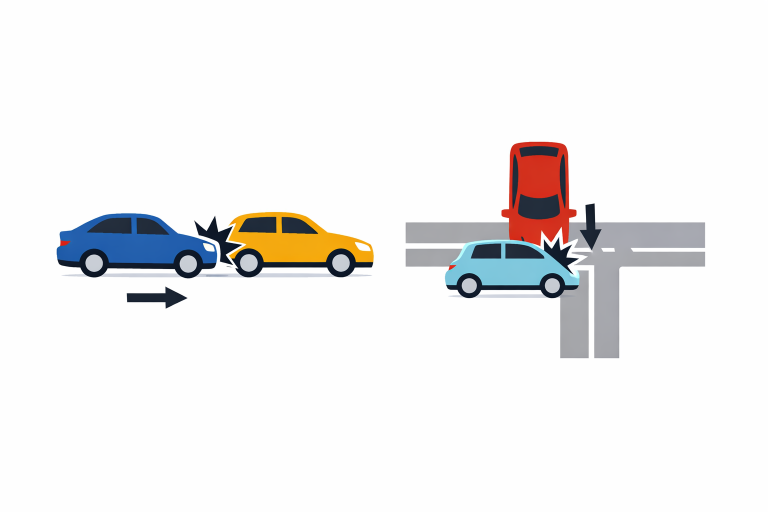
Rear-end collisions usually occur when one vehicle strikes the back of another, often at intersections or in heavy traffic. T-bone accidents, also known as side-impact or broadside crashes, happen when the front of one vehicle hits the side of another, forming a “T” shape. While both types of crashes are dangerous, their impact on occupants can vary significantly based on factors like vehicle speed, safety features, and where passengers are seated.
In cities with heavy traffic and many intersections, such as Philadelphia, being aware of the risks and differences between these accident types is crucial for safer driving. Each accident type presents its own hazards, with potential for life-changing injuries depending on the circumstances.
This article dives into how rear-end collisions and T-bone accidents happen, the most common injuries, and which accidents tend to result in more severe consequences. We’ll also discuss prevention tips and what drivers should do if they’re involved in either type of crash.
How Rear-End Collisions Happen
Rear-end crashes are among the most frequently reported car accidents in the United States. These incidents typically happen when the trailing driver is distracted, speeding, or following too closely. Common scenarios include sudden traffic slowdowns, distracted drivers, or slippery road conditions that reduce stopping distances. Even a minor lapse in attention can result in one vehicle crashing into the back of another.
How T-Bone Accidents Occur
T-bone accidents most often happen at intersections when one driver fails to yield, runs a red light, or misjudges oncoming traffic. Unlike rear-end collisions that generally involve two cars moving in the same direction, T-bone crashes involve vehicles traveling on perpendicular paths. The driver or passengers on the side of impact are at high risk because the side panels of vehicles offer much less protection than the front or rear bumpers. For further insight, check resources like NHTSA’s Traffic Safety Facts.
Common Injuries from Rear-End Crashes
The most commonly reported injury from a rear-end collision is whiplash, which occurs when the sudden force jerks the head backward and then forward. This action can strain neck muscles and ligaments, resulting in lasting pain and stiffness. More severe cases may involve herniated discs or spinal cord damage. Minor fender-benders can still cause soft tissue injuries and concussions, while severe impacts might lead to broken bones, facial injuries from airbags, or traumatic brain injuries if the head strikes the seat or dashboard.
Injuries in T-Bone Collisions
T-bone accidents are especially perilous because there is generally less material between the point of impact and the occupants, making serious injuries more likely. Side airbags are not as widespread or as robust as front airbags, and side panels offer only limited protection from an oncoming car. These crashes can lead to catastrophic injuries, including severe head trauma, spinal injuries, pelvic fractures, internal organ damage, and even fatalities. Those sitting closest to the side of impact are at greatest risk for life-threatening harm.
Which Type Causes More Serious Injuries?
While any accident has the potential for serious outcomes, T-bone collisions are statistically more likely to cause catastrophic injuries and fatalities compared to rear-end crashes. According to the Insurance Institute for Highway Safety, side-impact crashes tend to be deadlier because the force is concentrated into a smaller area of the car, and the lack of crumple zones on the sides puts occupants at greater risk. Rear-end collisions, on the other hand, often result in whiplash and other musculoskeletal injuries, but rarely reach the same severity as injuries seen in broadside crashes when both accidents happen at comparable speeds. For data and statistics, see the IIHS Fatality Statistics.
Prevention Tips
- Maintain a safe following distance and avoid tailgating.
- Stay alert and minimize distractions like texting or eating while driving.
- Always come to a complete stop at intersections, and look both ways before proceeding even if you have the right of way.
- Obey all traffic signals and yield signs, especially in busy urban areas.
- Drive at speeds appropriate for road and weather conditions.
- Invest in vehicles with modern safety features, such as advanced airbags and collision avoidance systems when possible.
What to Do After Either Type of Accident
After any collision, prioritize safety by moving vehicles out of traffic if possible and checking for injuries. Call 911 and seek medical care even if you feel fine initially; some injuries, such as concussions or internal bleeding, are not immediately obvious. Document the accident scene with photos and collect contact information from all involved parties and witnesses. Notify your insurance carrier as soon as practical to begin the claims process. It may also be helpful to consult with a local accident attorney to understand your rights and responsibilities.
Conclusion
Both rear-end collisions and T-bone accidents can result in debilitating injuries, but T-bone crashes are more likely to cause life-threatening harm due to the mechanics of side-impact forces and the limited structural protection on vehicle sides. Practicing defensive driving, staying alert at intersections, and never rushing through a yellow light can help reduce the risk for both types of crashes. Involvement in either type of accident should always be taken seriously, and prompt medical and legal help can make a significant difference in recovery and future well-being.