


Key Takeaways
- Robotic-assisted surgeries offer greater precision, resulting in faster recovery times.
- Minimally invasive techniques reduce postoperative pain and shorten rehabilitation periods.
- Artificial intelligence (AI) personalizes rehabilitation programs, improving patient adherence and outcomes.
- 3D printing technology enables the creation of customized implants, thereby enhancing surgical success rates.
- Telehealth and wearable devices facilitate remote monitoring, ensuring continuous patient care.
Table of Contents
- Robotic-Assisted Surgeries
- Minimally Invasive Techniques
- AI in Rehabilitation
- 3D Printing in Orthopedics
- Telehealth and Wearable Devices
- Conclusion
Modern orthopedic care has undergone a significant transformation in recent years, with advancements in technology, surgical techniques, and rehabilitation strategies contributing to improved patient outcomes. Today, patients benefit from approaches that focus not only on repairing injuries but also on promoting faster recovery and long-term joint health. Innovations such as minimally invasive procedures, advanced imaging, and personalized rehabilitation plans have redefined what patients can expect during their recovery journey, allowing for shorter hospital stays, reduced discomfort, and quicker returns to daily activities.
One area where these advancements are particularly evident is orthopedic surgery in Jenks for minimally invasive joint treatments. Procedures such as arthroscopy and targeted joint repair offer precision and reduced trauma to surrounding tissues, thereby accelerating healing and improving functional outcomes. By combining modern surgical techniques with comprehensive post-operative care, orthopedic care now emphasizes both efficiency and the quality of recovery, ultimately enhancing the overall patient experience.
Robotic-Assisted Surgeries
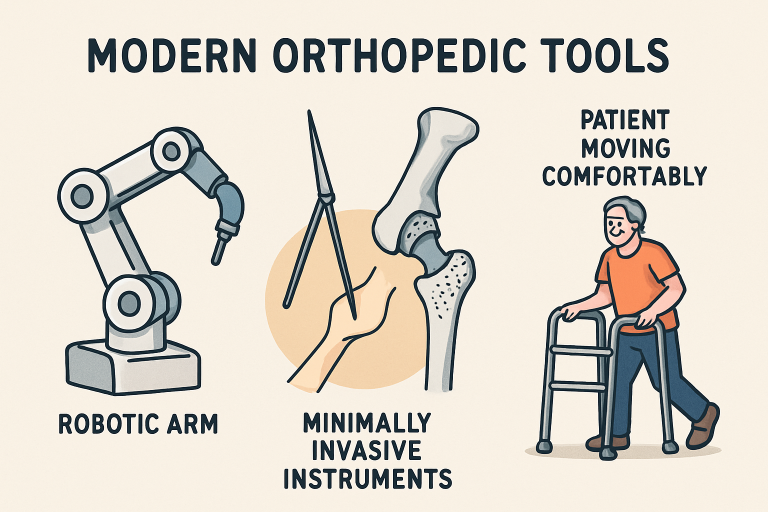
Surgical robots have transformed the orthopedic landscape by enabling surgeons to perform with heightened accuracy and enhanced vision. Through advanced imaging and computer guidance, robotic systems help surgeons meticulously plan each phase of a procedure. This improved control results in more precise implant placement, minimizing unnecessary tissue disruption and optimizing joint function.
The benefits for patients are significant: reduced surgical trauma, less blood loss, and a substantially lower risk of complications. These advantages translate into shorter hospital stays, lower rates of infection, and, most importantly, quicker paths to full mobility. Robotic joint replacement, for instance, has been associated with improved alignment and reduced recovery times, benefitting thousands of patients worldwide.
Minimally Invasive Techniques
Minimally invasive orthopedic surgery is now the gold standard for many procedures, including joint repair and ligament reconstruction. These techniques utilize smaller incisions and specialized instruments, resulting in significantly less trauma to the surrounding muscles and tissues. For patients, this leads to a substantial reduction in postoperative pain and scarring.
By preserving healthy tissue, minimally invasive techniques not only speed up recovery but also lower the likelihood of complications and infection. Patients can resume their normal activities sooner after surgery, often experiencing better long-term functional outcomes. Clinical evidence consistently supports these claims, with patients reporting higher satisfaction rates and improved quality of life after undergoing minimally invasive procedures.
AI in Rehabilitation
Artificial intelligence is playing a rapidly expanding role in modern rehab protocols. Through the aggregation and analysis of large volumes of patient data, AI-driven platforms create highly tailored rehabilitation plans. These smart applications monitor patient progress in real-time, identifying patterns and making on-the-fly adjustments based on actual performance.
Not only does this improve adherence—ensuring patients complete exercises correctly and consistently—but it also personalizes the experience, driving better functional outcomes. Clinics that adopt AI in their physiotherapy and occupational therapy regimens are reporting fewer setbacks, a reduced risk of reinjury, and higher rates of successful recoveries.
3D Printing in Orthopedics
The use of 3D printing in orthopedic surgery is revolutionizing the design and manufacture of implants and prosthetics. Unlike traditional implants, 3D-printed devices can be custom-tailored to a patient’s unique anatomy, fitting more precisely and providing greater comfort and stability. This reduction in “one size fits all” components leads to fewer complications, better long-term joint function, and faster returns to physical activity.
Surgeons are now embracing 3D printing not only for custom joint replacements but also for bone scaffolding, surgical guides, and prosthetic limbs, pushing the boundaries of what is possible in restorative care. This innovation ensures a smarter surgical approach and longer-lasting solutions for chronic orthopedic issues.
Telehealth and Wearable Devices
Advances in remote monitoring and telemedicine are significantly enhancing follow-up care for patients with orthopedic conditions. Through video consultations and smartphone-connected wearables, care providers can continuously track a patient’s movement, range of motion, and adherence to home exercise programs. This real-time feedback loop enables timely intervention if progress slows, thereby maintaining patient engagement throughout the recovery process.
Wearable tech data—transmitted securely—offers insights that were previously unavailable between clinic visits, improving both patient experience and care quality. Especially in situations where regular in-person visits are impractical, telehealth ensures that patients stay on track, reducing the risk of complications and readmissions.
Conclusion
The landscape of orthopedic care is rapidly changing, driven by innovations that empower both patients and practitioners. Groundbreaking advances in surgical technology, personalized rehabilitation, custom implants, and digital monitoring tools mean today’s patients experience faster, safer, and more complete recoveries. These progressive approaches not only enhance surgical precision and functional outcomes but also give patients increased confidence and involvement in their own healing journey. As the field continues to evolve, staying informed about these trends enables patients to make informed choices for their musculoskeletal health.