


Key Takeaways
- Understanding various cybersecurity testing methods enhances an organization’s defense mechanisms.
- Regular assessments help identify vulnerabilities before they can be exploited.
- Combining automated tools with manual testing provides a comprehensive security evaluation.
Table of Contents
- Introduction
- Penetration Testing
- Vulnerability Assessments
- Breach and Attack Simulation
- Red Teaming
- Security Scanning for Cloud, Mobile, and Wireless
- Interactive Application Security Testing
- Best Practices for Effective Cybersecurity Testing
- Conclusion
In today’s rapidly digitizing world, organizations of every size face an unprecedented level of cybersecurity risk. As cybercriminals become increasingly sophisticated, it is crucial for companies to enhance their resilience through regular testing and robust security practices. Embracing security penetration testing for compliance and risk reduction is a foundational step that helps uncover critical weaknesses before attackers can exploit them.
Robust cybersecurity testing is more than just a best practice—it’s a strategic imperative. Organizations that invest in repeated assessment and improvement not only protect sensitive information but also build trust among customers and stakeholders. By understanding and deploying diverse testing methods, companies can proactively defend against both common and emerging threats.
Effective cybersecurity testing requires a nuanced approach that combines technical evaluations with employee training and response planning. Businesses that overlook the human and process aspects of cybersecurity expose themselves to unnecessary risk. Across industries, the ability to identify and remediate vulnerabilities reliably has become a competitive differentiator.
This comprehensive guide outlines the essential cybersecurity testing methods every business should adopt, supported by proven best practices and up-to-date resources from leading industry experts.
Penetration Testing
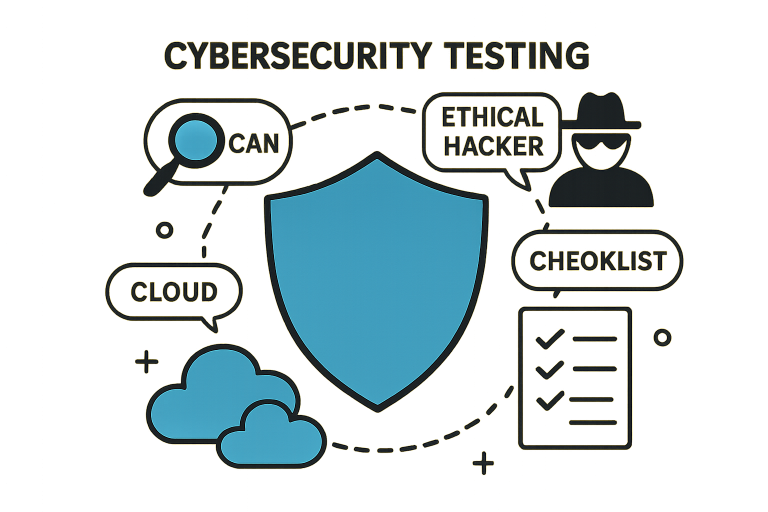
Penetration testing, also known as ethical hacking, involves authorized security professionals attempting to breach a system or network. By simulating the techniques used by real attackers, these experts can uncover vulnerabilities that automated scans alone may miss.
This method closely mirrors real-world cyberattacks, providing organizations with actionable insights into their true risk exposure. Not only do penetration tests aid compliance, but they also help prioritize remediation by revealing which vulnerabilities pose the greatest threat to business operations. For more details on penetration testing and why it’s a cybersecurity necessity, review guidance from the Cybersecurity and Infrastructure Security Agency (CISA).
Vulnerability Assessments
Vulnerability assessments are systematic evaluations that identify and quantify security weaknesses across an organization’s infrastructure. These assessments may include host and network scanning, web application reviews, database evaluations, and scrutiny of wireless systems.
The primary goal is to build a comprehensive inventory of vulnerabilities, categorized by severity and potential impact. Regular assessments ensure organizations remain vigilant to new or evolving threats, particularly as infrastructures change or expand. Modern vulnerability management tools often integrate with patch management systems to streamline remediation processes.
Breach and Attack Simulation
Breach and attack simulation (BAS) tools automate the process of emulating cyber threats across various network layers. Unlike one-time testing, BAS platforms offer continuous testing, enabling organizations to measure the effectiveness of their security controls in real-time.
By generating detailed reports, BAS helps highlight gaps in defenses and supports decision-making for security investments. Emerging BAS solutions can even simulate the trickiest modern threats, such as ransomware attacks and multi-stage intrusions. Investing in BAS is particularly beneficial for organizations with complex, distributed IT environments.
Red Teaming
Red teaming extends traditional penetration testing by simulating the tactics, techniques, and procedures (TTPs) of advanced persistent threats. Red team operations are designed to challenge not only security technology, but also an organization’s monitoring and incident response processes.
This holistic approach assesses how effectively people, processes, and technology can collaborate to detect and respond to attacks. Red teaming often reveals critical visibility or response gaps, driving improvements in security posture that directly correlate to reduced breach risk. Red team exercises are now a core element of security frameworks for regulated industries, including finance and healthcare.
Security Scanning for Cloud, Mobile, and Wireless
As businesses increasingly rely on cloud platforms, mobile apps, and wireless networks, these environments have become prime targets for sophisticated cyberattacks. Specialized security scanning in each of these domains is crucial to detect misconfigurations, unauthorized devices, data leaks, and insecure APIs.
Cloud security scanning tools assist with monitoring configurations to ensure compliance with frameworks such as NIST or CIS. Meanwhile, regular mobile and wireless security checks prevent unauthorized access and exposure from rogue endpoints. Integrating these targeted scans into the broader cybersecurity program enables organizations to protect their most dynamic assets.
Interactive Application Security Testing
Interactive Application Security Testing (IAST) combines static and dynamic code analysis while applications are running. Unlike traditional static tools that just scan source code, or dynamic tools that only examine running apps, IAST checks both simultaneously for deeper coverage.
This dual perspective yields more accurate results and dramatically accelerates the identification and remediation of flaws, especially in agile development cycles. Developers benefit from real-time feedback integrated into their workflows, closing critical security gaps before code reaches production.
Best Practices for Effective Cybersecurity Testing
- Regular Testing: Establish a consistent schedule for assessments to maintain current security postures.
- Comprehensive Coverage: Ensure thorough evaluation of IT systems, applications, and network infrastructure.
- Combination of Methods: Leverage both automated and manual testing to gain deeper insights into risks.
- Employee Training: Invest in ongoing security awareness to help employees recognize and report threats quickly.
- Incident Response Planning: Prepare tailored response protocols based on vulnerabilities identified during testing.
Conclusion
A robust combination of cybersecurity testing methods empowers organizations to stay ahead of attackers, minimize business risk, and build customer trust. By prioritizing regular assessments and adopting best practices, companies dramatically reduce their exposure to both new and evolving cyber threats. In the ever-evolving digital landscape, proactive defense through diligent testing remains the most effective path to security and resilience.